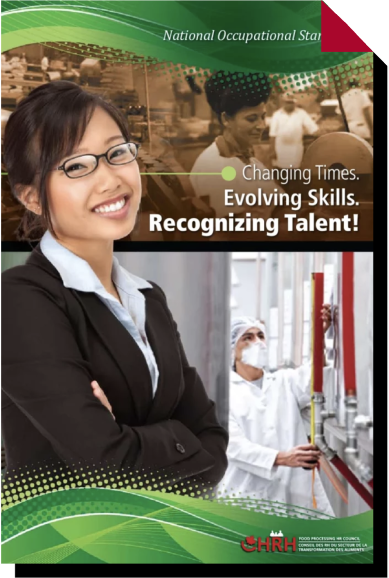
Over the past 20 years, Canada’s food and beverage processing industry has faced rapid technological change, global competition, and evolving business practices. To remain competitive, the industry must embrace innovation and develop a skilled workforce. Key challenges include an aging workforce, skill gaps among immigrants, increasing regulations, and inconsistent training across regions and subsectors. A national approach is needed to identify and certify common and occupational-specific skills. The 2008 *Diagnostic Assessment* report highlighted the need for standardized training in areas like HACCP, health and safety, and technology. To address these issues, the Food Processing HR Council (FPHRC) launched a needs assessment to identify in-demand occupations, cross-sector skill requirements, and a methodology for developing National Occupational Standards (NOS) to support certification and workforce development.
Insights in This Report:
In recent years, rapid changes in technology, a declining and aging workforce, increased regulation, and a growing immigrant labour pool without all the requisite skills and qualifications, are some of the leading challenges of the industry.
The adoption of technology in the food and beverage industry will continue to impact the skill requirements of the existing and future workforce.
Increased government regulations, food safety, and health and safety requirements have increased the burden on businesses to provide food processing training where little training is currently available.